
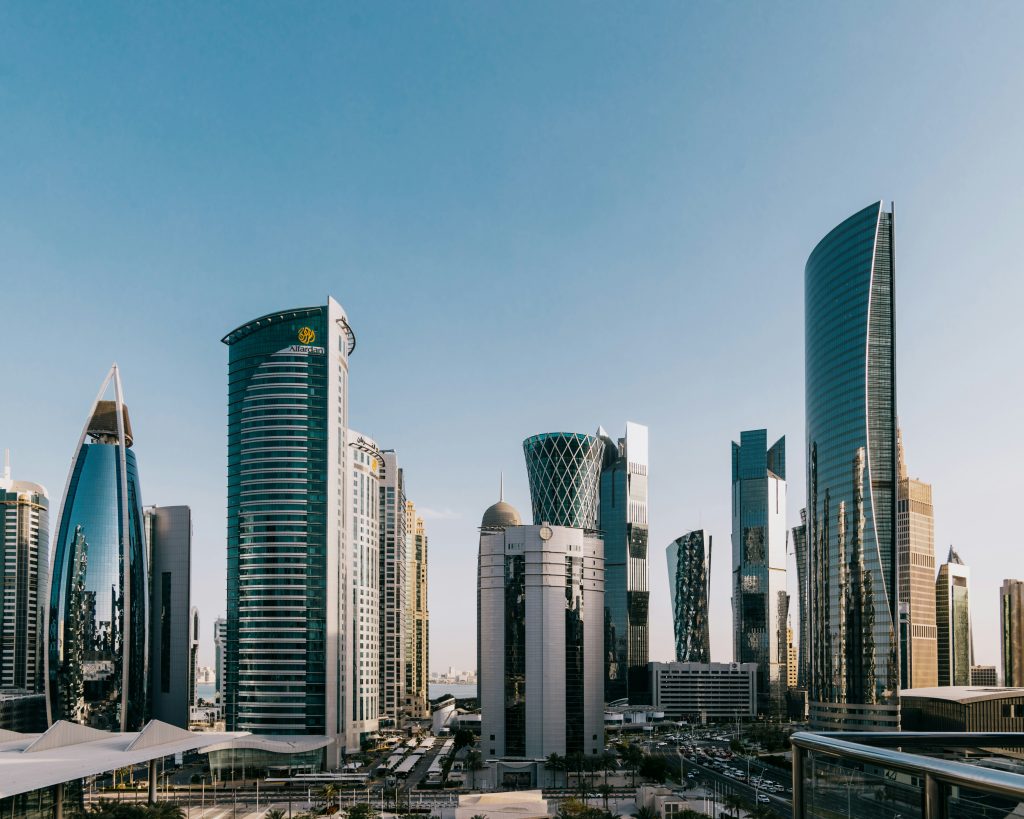
What is realistic for Belgian and Dutch investors. Many publications talk about high returns in the Middle East, but few sources clearly explain how returns in Qatar actually work. European investors are not looking for speculation; they want predictable, stable income that matches their need for security.
This article offers a clear and complete view of net returns, the rental market, the guaranteed yield in the first three years and the long-term value of premium real estate in Qatar.
Net return in Qatar is the return you actually receive. It is the income after deduction of all costs. It is a straightforward calculation without additional taxes and without complex exceptions.
In premium residences on The Pearl and in Lusail, net rental yield is around 8%. In many projects, this yield is fully guaranteed during the first three years. That gives investors significant financial peace of mind at the start of their investment. Rent is paid out without you having to arrange the letting or follow-up yourself.
This is what distinguishes Qatar from many other markets. While returns elsewhere are often presented in theoretical terms, Qatar works with a realistic and guaranteed structure.
The rental market in Qatar is driven by a stable expat population, mainly employed in sectors with long-term contracts and high income levels: aviation, healthcare, education, finance and energy.
Tenants typically stay in the same residence for 2 to 5 years. In premium projects, demand is higher than the available supply. This is clearly visible in The Pearl, Lusail Marina and Gewan Island.
The combination of stable expat demand, limited construction volumes and high quality of life keeps rental prices less volatile than in Dubai or other markets. For investors this means less vacancy and more certainty.
In selected top residences, net rental yield is 8%. This yield is guaranteed for the first 3 years.
This means you know exactly what you will receive for 3 years. Payments are made by the operator or developer who manages the entire rental program. You do not need to look for tenants and you do not bear vacancy risk during that period.
You enjoy all the advantages of direct real estate ownership without operational concerns in the first 3 years.
After the guarantee period, the property is rented out on the open market, which in premium zones typically results in a stable net yield. Most investors experience that returns remain in the 7.5–8.5% range in subsequent years.
The reason is simple: Qatar’s premium segment has little vacancy, strong international demand and a limited number of available units.
Premium projects in Qatar are developed in controlled zones such as The Pearl and Lusail. The country works with strict planning in which quality, liveability and infrastructure are central. This leads to scarcity within the best areas.
In a market with little speculation, where many owners intend to hold their unit for the long term, a more stable price level and more predictable rental market naturally emerge.
For Belgian and Dutch investors, that is exactly what they are looking for: calm and predictability.
Many investors choose to finance part of their purchase through a Qatari bank. Banks typically provide loans between 60% and 70% of the purchase price.
When you receive 8% net yield on the full property value, but only finance 40–60% of that value with your own capital, your return on equity rises significantly.
The effect is straightforward: you invest a smaller amount of your own money, but earn returns on a much larger asset. Leverage can push the effective return on your own capital towards 8–12%, depending on financing conditions.
For many investors, this leverage effect is a decisive argument.
Qatar does not experience explosive price cycles like Dubai. Growth is calmer but more consistent. Premium real estate appreciates gradually through scarcity, infrastructure investment, Vision 2030 and the expansion of the expat population.
This makes capital gains in Qatar less speculative and more structural. Over a period of five to ten years, many owners see clear upward movement in the premium segment, especially in projects with international branding such as St. Regis or Four Seasons.
Capital appreciation is never guaranteed, but Qatar combines steady growth with a very low risk profile — attractive for long-term investors.
Qatar offers a combination that is rare in international real estate:
On top of that comes the added value of a residency permit that you and your family can obtain when you buy in a freehold zone. Returns and security come together in a single investment.
Returns in Qatar are not based on marketing promises, but on a stable rental market and a clear structure. The guaranteed yield during the first three years gives investors a worry-free start. The stable expat demand, premium segment and limited construction volumes then provide predictable long-term income.
In combination with financing possibilities and the leverage effect, this results in strong returns on equity. For Belgian and Dutch investors who want security and do not wish to speculate, Qatar is an exceptionally logical choice.